ECA Learning Hub
Search results: 144


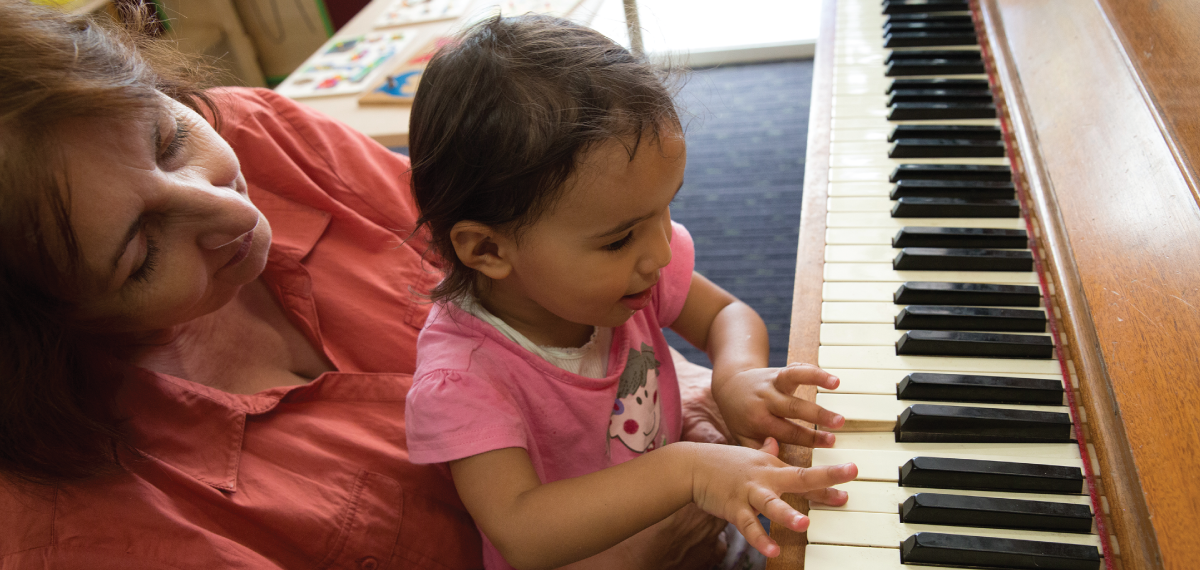
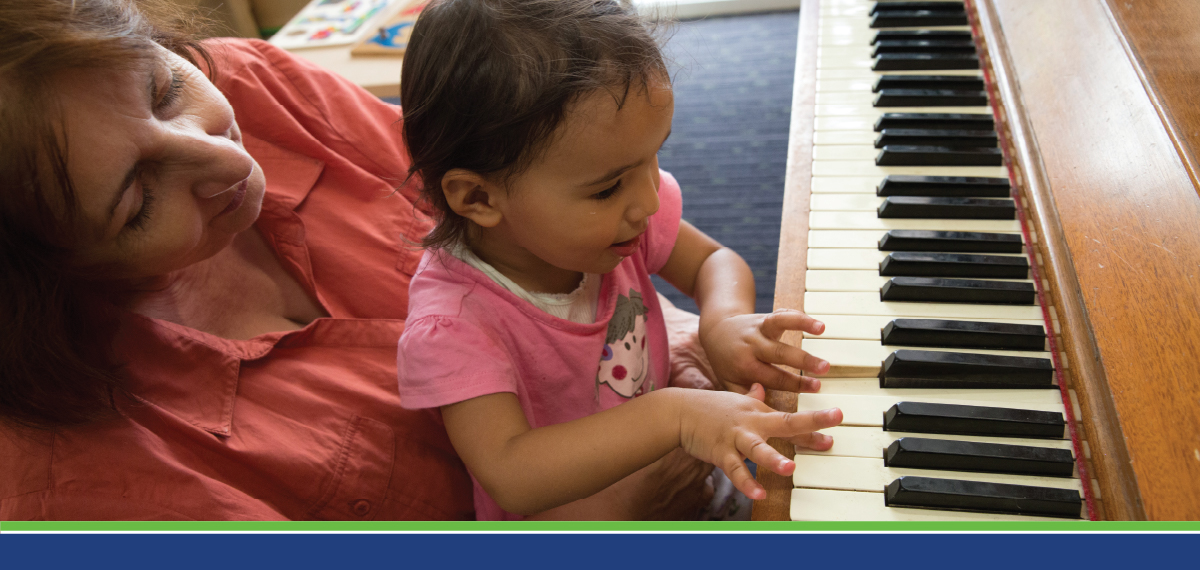
Music has long been regarded as an important part of early childhood education. In this module, explore music as an integral and vibrant part of a child’s family, community and culture, and how it can be utilised as a powerful tool for learning and development. Written by Dr Amanda Niland, this module is a vibrant look at the foundations of music, ‘musicking’ and musical skills — for both educators and children.
For young children, music can be a way of:
- connecting with others
- expressing themselves, and
- exploring and making meaning through their senses.
In this course you will:
- understand the central role of music in children’s lives
- explore how music contributes to children’s sense of belonging and developing identity
- examine the ways in which music can support and enrich children’s learning and development in communication and language, social skills, motor skills, creative and flexible thinking
- view music as both a mode of communication and an expressive art form and children as capable musicians, and
- discover strategies and resources you can use to increase your confidence and ability to share in music-making with young children.

This course is designed for anyone working in services with school age care children who want to learn about or refresh their understanding of the nationally approved framework, My Time, Our Place: Framework for School Age Care in Australia (V2.0).
In this course, you will:
- explore the elements Belonging, Being and Becoming within the My Time, Our Place: Framework for School Age Care (V2.0) framework
- discover the Principles, Practices and Outcomes of this nationally approved learning framework
- recognise the importance of this framework for educators in order to support children and young people’s learning
- examine the connections between the National Quality Standard and the My Time, Our Place (V2.0) framework.

This package contains the modules Introduction to the Talking Tubs Moving forward with Talking Tubs for those who wish to focus on the Talking Tubs.
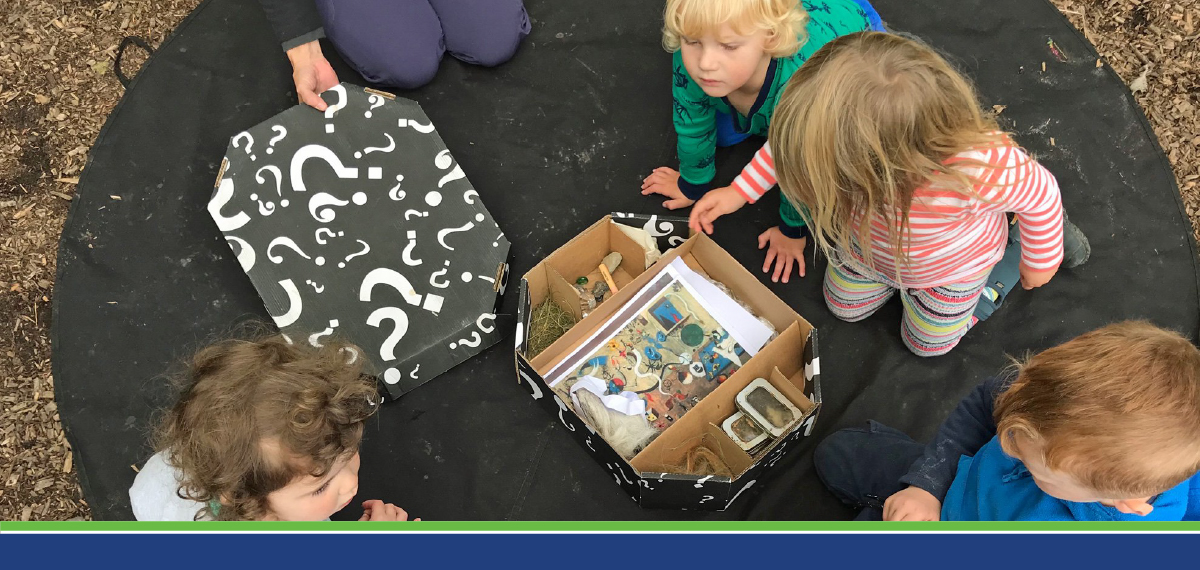
A Talking Tub is an object which a practitioner fills with a wide variety of objects which all fit a particular theme. Objects can then be taken out one by one encouraging children to touch, feel, and explore a theme. Observation, documentation, assessment and planning are most effective when they are matched to the needs of the child. In order to achieve this we need to understand children’s thinking, through considering all the ways in which they communicate.
In these modules, you will have learnt how to:
- ensure quality and intentionality of the contents when making up a Talking Tub
- balance questioning and discussion with children
- use Talking Tubs with non-verbal children
- use the process of self-expression and know-how visible for children, staff and visitors
- use Talking Tubs with those who English is an additional language.
The Talking Tub is a vital part of the Talking and Thinking Floorbooks Approach. The tub will allow you to provoke child-led conversations which in turn will create Possible Lines of Development.

This package contains the modules Introduction to the Floorbooks Approach and Moving forward with Floorbooks Approach for those who wish to focus on the Floorbooks Approach.
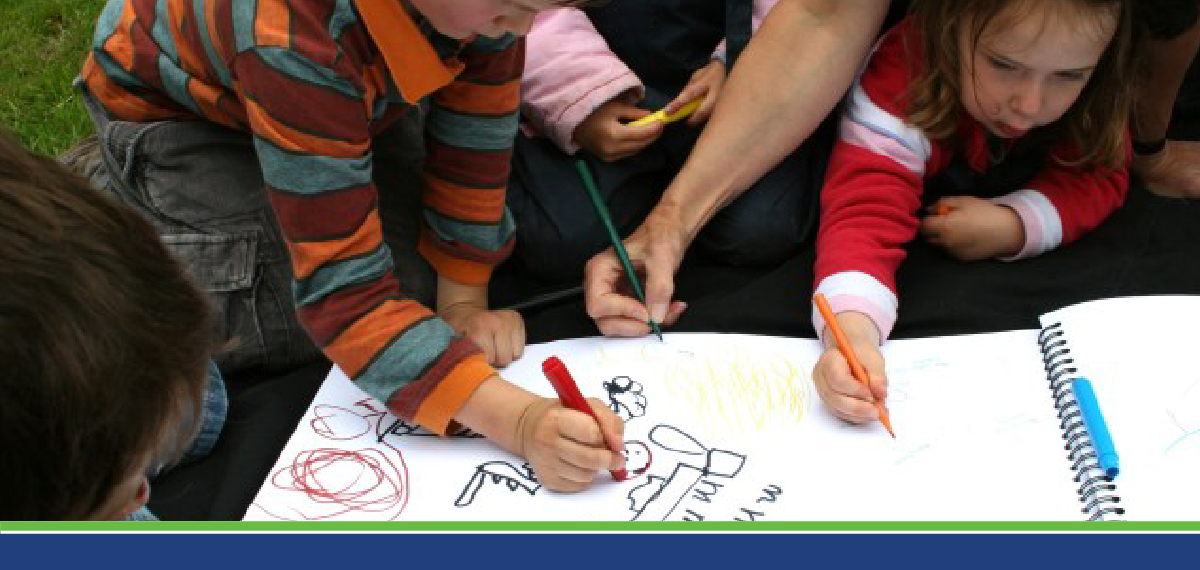
The Floorbooks Approach® is designed to create a balance between adult intentionality and child autonomy. The planning cycle should take account of both facets of our role in education to make sure that children are engaged in learning and develop the dispositions for lifelong learning. Floorbooks allow educators to consult deeply with children during the planning and documentation process. The approach encourages higher order thinking skills and helps children influence their learning.
After completing this package, you will understand how the Floorbooks Approach® is a way to support:
- gain an understanding of a new, collaborative form of documentation and how to create a balance between adult intentionality and child autonomy
- support children to become engaged and active in their own learning
- the planning process as a holistic approach to children’s learning and development.

This course has been developed to help educators build and strengthen partnerships with families on an ongoing basis, taking into account different circumstances and settings. It includes video interviews with educators from three service types, including long day care, family day care and outside school hours care.
Whichever part of the early childhood education and care sector you work in, this course will provide you with helpful information and ideas on how to build relationships and partnerships with families in your setting.
In this course, you will unpack:
- what is desirable in relationships between educators and families
- some of the challenges and rewards that come with taking the time to build solid partnerships with families
- the uniqueness of each educator–family relationship
- why the child’s wellbeing needs to be the focus of the relationship
- how different service types approach partnerships with families.

Inclusion benefits all children. Partnerships with families and caregivers underpin young children’s inclusion, learning and development. This module examines the role of effective partnerships to enable inclusion within early childhood education and care services.
In this course, you will:
- explore how partnerships with families and caregivers underpin young children’s inclusion, learning and development
- explore the benefits of partnerships to enable inclusion
- explore inclusive practices in early childhood settings, and
- examine the role of inclusion in various services and settings.

Vision and philosophy represent the core values that inform all practice areas of a business. They are essential components for the operation of early childhood settings and are integral to the achievement of an ‘Exceeding National Quality Standard’ rating. Nevertheless, they are not always understood by educators and managers. This three-part series will expand on the meaning of vision and philosophy and explain how they can be used effectively within early and middle childhood settings.
In this course, you will:
- explore the concepts of vision and philosophy and their relationship to the National Quality Framework
- introduce theories related to the concepts
- provide case studies and resources
- apply their understanding through an interactive exercise and encourage them to develop a sample vision and philosophy for their setting.

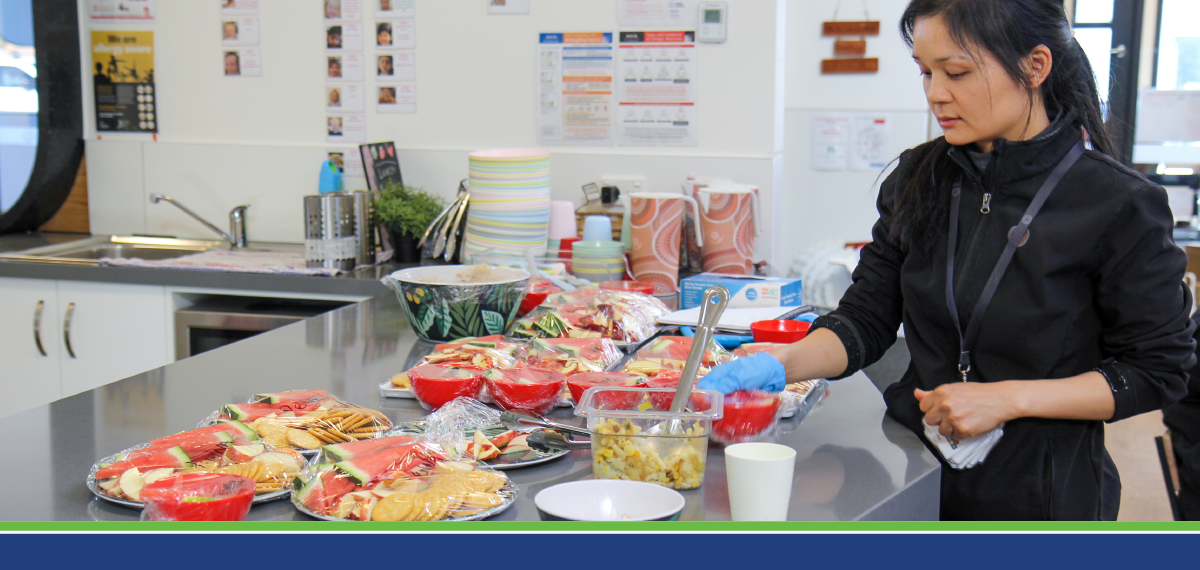
In the early childhood education and care (ECEC) environment, supporting healthy dietary habits is crucial for children’s growth, health and development. Over 90% of Australian children do not meet vegetable intake recommendations. This course supports educators and cooks to strengthen their skills in planning balanced, nutritious menus that align with the Australian Dietary Guidelines, the National Quality Framework, and the National Regulations. Participants will explore the vital role of nutrition in early development and learn how to create menus that meet diverse nutritional needs, while also encouraging positive eating behaviours and meaningful food experiences. As many children are consuming up to two-thirds of their recommended daily intake while in care, ECEC settings are uniquely positioned to influence long-term health outcomes. The course also unpacks practical strategies for ensuring food safety and hygiene, while supporting compliance with relevant health standards and regulations. Through this learning, participants will gain confidence in developing menus that not only meet requirements but also foster lifelong healthy eating habits.


Play-based learning is a cornerstone of early childhood education. In recent years, the concept of intentional teaching has also gained momentum. This on-demand webinar discusses a new approach to balancing open-ended play with intentional teaching, using the Pedagogical Play-framework. According to the framework, three main types of play—open-ended, modelled and purposefully framed—can be used in multiple combinations to support young children’s learning.
This on-demand webinar will:
- help you understand the Pedagogical Play-framework and the relationship between open-ended, modelled and purposefully framed play
- introduce you to the theoretical ideas in the work of Vygotsky that underpin the Pedagogical Play-framework.

This webcast examines the science of gratitude and outlines how combining gratitude with co-play enables positive change in the wellbeing of children from birth to age five. It also explores the development, implementation and findings of the Playing with Gratitude project and the role of mental health in children’s learning and development.
This course examines:
- the significance of gratitude and how it can be used as a tool to support children’s learning and development
- the role of play and gratitude in developing executive functioning skills, independence and wellbeing
- links between gratitude and the development of positive neural pathways and social capacities, such as strong verbal reasoning and self-regulation skills
- the role of gratitude in developing connections to self and between educators, families and the community.

What does privacy look like in children’s services, and how do educators ensure they’re not in breach of the Privacy Act 1988? Using case studies from the sector, this course examines different aspects of the Privacy Act 1988, including the Notifiable Data Breaches scheme. It explains what qualifies as sensitive information and who regulates and protects privacy. The course also identifies useful support strategies to maintain and protect privacy across different service types.
In this course, you will:
- understand what privacy is
- think deeply about maintaining privacy in their setting
- recognise who regulates and protects our privacy
- implement strategies to protect privacy in their setting
- understand the Notifiable Data Breaches scheme under the Privacy Act 1988 connect with the Office of the Australian Information Commissioner.

This webcast explores the idea of professional identity in two ways— who you are and what you do. You will ponder notions of professionalism and your identity in early childhood education and care in relation to children, families, colleagues and the community. Educators are encouraged to stop and reflect, individually and with colleagues, on the importance of being an ethical early childhood educator in relation to element 4.2.1 of the National Quality Framework – Management, educators and staff work with mutual respect and collaboratively, and challenge and learn from each other, recognising each other’s strengths and skills. In addition to reflecting on identity, this course asks you to consider links between professional identity and the implications of professional ethics on your practice.
In this course, you will:
- ponder notions of professionalism and your identity in relation to children, families, colleagues and the community
- be encouraged to stop and reflect on the importance of being an ethical early childhood educator
- be asked to consider the link between professional identity and the implications of professional ethics on your practice and being an advocate for the profession
- explore ideas about professional collaboration and conduct.
In this on-demand webinar, Susan Irvine, Karen Thorpe and Jane Bourne explore leadership approaches and strategies for professional practice in long day care centres. While discussing a Queensland study on the early childhood education and care workforce, they ask centre leaders to reflect on the question, ‘What does professional practice mean to you?’ and specifically examine how directors can demonstrate and support professional practice in long day care settings.
This on-demand webinar will help you:
- identify what the term professional practice means to you
- understand how, as a centre leader or as part of the leadership team, you can enable professional practice
- recognise how enabling leadership within your teams can make a difference to service practice across all aspects of education and care work.

Putting art in place by Dr Red Ruby Scarlet is a two-part professional learning series that focuses on art and how it can facilitate the development of relationships. That includes relationships with Country, children, and adults as well as with materials and technology to create a holistic artistic experience.
Often, educators may think they’re not ‘arty’ or ‘creative’, but when we focus less on expertise and more on relationships, we are able to create truly meaningful artistic experiences for children and educators. This in turn empowers them to put art in place in their everyday curriculum.
Discussion about the learning that arises from these arts practices will be entwined through beautiful examples of how relationships with Country, people, materials, technology, and knowledge are generated in practice in and in-between.
The program will answer questions such as:
- Who is the teacher?
- What counts as valid knowledge?
- What does learning look and feel like in human-nonhuman relations?
- How Indigenous cosmologies infused throughout all of these relationships?
Working this way takes the idea of the environment as third teacher from a human-led and controlled curriculum, to a collectively created one where place, materials and non-Western knowledge flourish. This allow us to centre arts practice as the nucleus of learning in early childhood curriculum.
By taking this approach to putting art in place, children will thrive and educators and teachers will benefit as equally successful learners.

This course is suitable for all educators looking to build their confidence in taking their first steps or next steps in embedding reconciliation in an approved education and care setting. This is a foundation course that may be suitable for educators new to the sector or embarking on a formal early childhood qualification.
Exploring reconciliation in early childhood education and care settings can be an extremely powerful way of teaching children about culture and introducing them to concepts such as respect, equity and justice. This course will help you take your first steps or next steps towards embedding Aboriginal and Torres Strait Islander perspectives and reconciliation into your daily practice. By referencing the truth about Australia’s history, this course explains how knowledge and personal beliefs may impact your experience of reconciliation and how they form the foundation for building reconciliation in education and care practice.
In this course, you will:
- develop an understanding of the meaning and importance of reconciliation between First Nations peoples and the broader Australian community
- take the first steps in understanding the history and culture of Aboriginal and Torres Strait Islander peoples personally and professionally
- establish how inclusive practices can support the progression of reconciliation in children’s education and care contexts
- develop an understanding of the meaning and importance of reconciliation in children’s education and care contexts across Australia.